Welcome to

Ethas

Ethics & Science

The Ethical Assessment Tool ETHAS is a state-of-the-art, checklist-based framework that helps researchers, conservationists, and organizations evaluate ethical dimensions in biodiversity conservation—covering environmental and social ethics, animal welfare, and research integrity in line with current standards and regulations. Customized for use in contexts such as assisted reproductive technologies (ARTs), museums, zoos, biobanking, and fieldwork, ETHAS supports vertebrate-based work (especially with mammals) by offering a robust ethical self-assessment process.

Request Access

Guiding Ethical Excellence  in Conservation Through Responsible Decision-Making.

Why ETHAS Is Crucial in Biodiversity Conservation

Today, conservation practice involves complex decisions that often require balancing the well-being of individual animals, the integrity of ecosystems, and the long-term survival of species. These decisions raise challenging ethical questions: how much human intervention is acceptable, and how should ecological benefits be weighed against potential harm or disturbance?

ETHAS provides a structured framework for evaluating such ethical dilemmas. It helps conservation professionals and institutions systematically assess factors including animal welfare, ecological impact, potential distress, and the overall balance between risk and benefit. By applying ETHAS, conservation actions become more transparent, ethically consistent, and aligned with responsible biodiversity protection.

What ETHAS Does

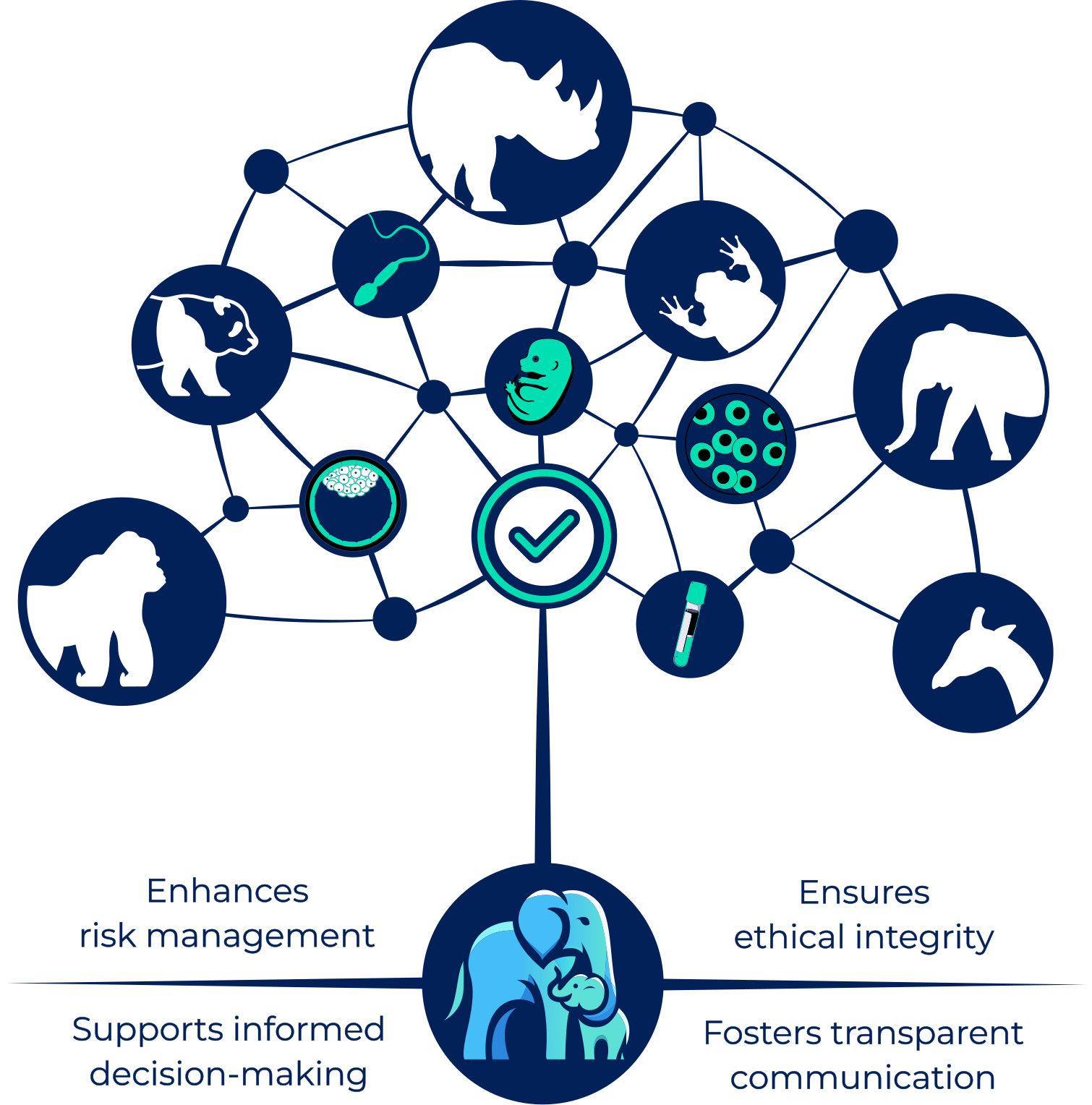
ETHAS combines several evaluation streams into one integrated instrument:
  • Risk assessment (general, ethical, and welfare-specific)
  • Pain, distress, and welfare evaluation
  • Harm-benefit analysis
  • The 3Rs (Replacement, Reduction, Refinement)
  • Environmental impact

At its core are structured checklists—a proven mechanism in many fields for identifying potential issues, improving operational and ethical standards, and ensuring transparent communication among stakeholders.

By working through ETHAS, teams can proactively identify ethically sensitive elements in their work, refine protocols, improve communication among members, and strengthen alignment with best practices and legislation.

When to use ETHAS

If you already have ethical approval
  • Use ETHAS to monitor ongoing welfare and ethical standards
  • Document compliance, track improvements, and enhance transparency
  • Facilitate internal communication
If you do not yet have ethical approval
  • Use ETHAS early in your project’s design phase
  • Perform a comprehensive self-assessment to identify ethically critical areas
  • Develop mitigation strategies in advance of external review
  • Improve the strength and clarity of your ethical review submission
Project decision and assessment illustration

How ETHAS Works

Request access to the ETHAS platform
Register your project
Complete the relevant checklists
ETHAS compiles your inputs to highlight strengths, flag risks, and support transparent decision-making.
ETHAS Certified Seal

The ETHAS Seal

The ETHAS Certification Program, managed by the University of Padua and the Conservation and Research Fund, recognizes organizations that apply the ETHAS ethical self-assessment framework. By completing the ETHAS process at www.ethas.org participants demonstrate transparency, responsibility, and a commitment to ethical best practices.

Organizations that complete the ETHAS self-assessment receive the ETHAS Certified Seal—a visible mark of excellence and ethical dedication. The seal confirms that the organization integrates the ETHAS framework into its internal culture of responsibility and continuous improvement.

Members and institutions using the ETHAS platform contribute a modest membership fee that supports the continued development and operation of ETHAS, ensuring the platform’s availability to research institutions, conservation projects, and other ethically engaged stakeholders worldwide. Certified participants are listed on www.ethas.org and may display the ETHAS Certified Seal to showcase their commitment to high standards in ethics and governance.

Which conservation activities are covered by ETHAS

ART illustration
Assisted Reproductive Technologies (ART)

Modern conservation increasingly relies on advanced reproductive methods to support endangered species. Yet such interventions often involve complex ethical considerations—from the welfare of individual animals to the broader consequences for populations and ecosystems. ETHAS enables practitioners to systematically assess these dilemmas, ensuring that reproductive interventions are guided by transparency, scientific integrity, and a strong ethical foundation.

Biobanking illustration
Biobanking

Biobanking is becoming a cornerstone of biodiversity preservation, offering the possibility of storing and later using genetic material for research and species recovery. However, questions arise regarding ownership, consent, data sharing, and the long-term ethical management of biological resources. ETHAS provides a structured framework to evaluate these responsibilities, helping biobanking initiatives operate with fairness, accountability, and respect for living beings and future generations.

Fieldwork illustration
Fieldwork and Wildlife Translocation

Fieldwork and wildlife translocation often involve direct human–animal interaction, habitat interventions, and monitoring under challenging conditions. These activities can affect animal welfare, local communities, and ecosystems in subtle but significant ways. ETHAS supports field researchers and conservation teams in identifying, evaluating, and mitigating ethical risks—from capture and transport to long-term monitoring—promoting responsible, transparent, and welfare-conscious practices in the field.

Zoos illustration
Zoos and Conservation Projects

Zoos play an evolving role in conservation—not only as centers of exhibition, but as active participants in research, education, and species recovery programs. Their actions directly influence animal welfare and public trust. By applying ETHAS, zoos and conservation projects can systematically evaluate how their practices align with ethical principles, ensuring transparency, humane treatment, and responsible decision-making across all conservation efforts.

Museums illustration
Museums and Genetic Heritage

Natural history museums hold invaluable biological collections that can contribute to modern genetic research, including the restoration of lost genes in endangered species. Yet using samples from deceased animals for genetic editing raises ethical and philosophical questions about respect for life, authenticity, and human responsibility. ETHAS helps museums navigate these frontiers by providing a structured approach to reflect on the ethical implications of genetic research, ensuring that innovation remains grounded in integrity and responsibility.

Help Improve Ethical Tools in Conservation

We’re gathering insights from researchers, conservationists, and stakeholders on the use and improvement of ethical self-assessment tools like ETHAS in wildlife and conservation work.

ETHAS in Numbers

Discover the impact of Ethas at a glance – key figures that showcase our mission, progress, and dedication to conservation.

0

Risks Mitigated

0

Projects Improved

0

Species Assessed

0

Assessments Completed

What people say
about us

"ETHAS provided us with a structured approach to assess the ethical risks in our conservation project, ensuring both animal welfare and the success of our efforts."

Prof. Thomas Hildebrandt

Institute for Zoo- & Wildlife Research

"Using ETHAS has improved our decision-making process by identifying ethical concerns early on, helping us implement more responsible conservation practices."

James Wu

Conservation Program Manager

"ETHAS is an invaluable tool for balancing the urgency of species preservation with the ethical treatment of individual animals."

Maria Lopez

Biologist